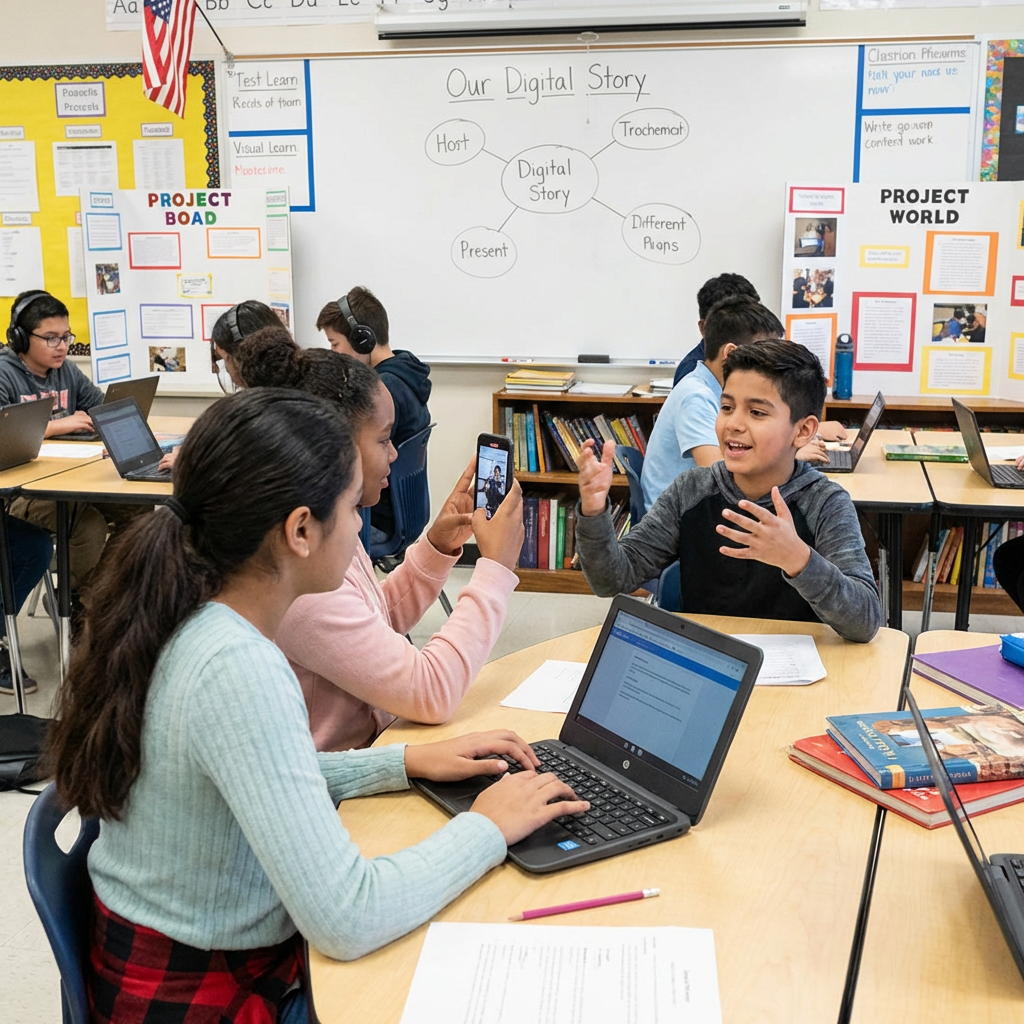
When considering BYOD in my classroom, I begin with the resources available to my students. At Astumbo Middle School, students consistently have access to laptops during instructional time, which provides a reliable foundation for digital learning. In addition to school-issued devices, many students also have smartphones that they use comfortably for communication and media creation. This combination of school-provided technology and personal devices creates a flexible learning environment that supports creativity and collaboration. Research suggests that mobile learning devices can positively support academic achievement when integrated intentionally (Cristol & Gimbert, 2014), and I view BYOD as an opportunity to extend learning rather than replace existing classroom structures.
Building on that foundation, accessibility becomes less about device ownership and more about purposeful implementation. Even with consistent laptop access, it remains important to design lessons that are structured and equitable. I intentionally incorporate collaborative learning structures to help students support one another during the digital storytelling process. Cristol and Gimbert (2014) emphasize that thoughtful implementation is critical in BYOD environments, and that principle guides my planning. When expectations are clear and technology use is aligned to academic objectives, devices enhance learning rather than create distractions.
In addition to laptops, smartphones can meaningfully expand the possibilities of this assessment. Students can use their phones to record narration, capture original images, conduct brief interviews, and gather research efficiently. Anshari et al. (2016) explain that smartphones enhance communication and real-time access to information when thoughtfully integrated into instruction. I have observed that when students shift from consuming content to creating it, their engagement noticeably increases. Supporting this idea, Dobbins and Denton (2017) found that mobile technology enhances student engagement when learners actively produce academic work rather than passively receive it.
Because this assessment centers on creation, digital storytelling becomes especially valuable as a measure of understanding. Instead of simply identifying informative text structures, students must research, synthesize information, write a script, and visually represent their learning. Robin (2016) describes digital storytelling as a process that encourages students to construct meaning rather than merely absorb information, which aligns closely with my instructional goals. The multimodal format allows students to demonstrate mastery through writing, design, and communication. In this way, assessment becomes an opportunity for students to show depth of understanding rather than just recall information.
Finally, digital storytelling reflects many of the engagement principles found in digital game-based and interactive learning environments. When students are responsible for producing a final product, their motivation and investment naturally increase. Khan et al. (2017) highlight that interactive digital environments promote sustained attention and participation, which mirrors what I observe during multimedia projects in my classroom. Students often take greater ownership when they know their work will be presented to an audience. Ultimately, digital storytelling aligns with my philosophy that assessment should allow students to demonstrate learning in authentic, meaningful ways while building the digital literacy skills they will continue to use beyond the classroom.
References
Anshari, M., Almunawar, M. N., Shahrill, M., Wicaksono, D. K., & Huda, M. (2016). Smartphones usage in the classrooms: Learning aid or interference? Education and Information Technologies, 22, 3063–3079.
Cristol, D., & Gimbert, B. (2014). Academic achievement in BYOD classrooms. Journal of Applied Learning Technology, 4(1), 24–31.
Dobbins, N., & Denton, P. (2017). MyWallMate: An investigation into the use of mobile technology in enhancing student engagement. Technology, Pedagogy and Education, 26(4), 429–445.
Khan, S., et al. (2017). Use of digital game-based learning and its impact on student engagement. International Journal of Emerging Technologies in Learning.
Robin, B. R. (2016). The power of digital storytelling to support teaching and learning. Digital Education Review, 30, 17–29.
 Blended Learning ePortfolio
Leave a comment