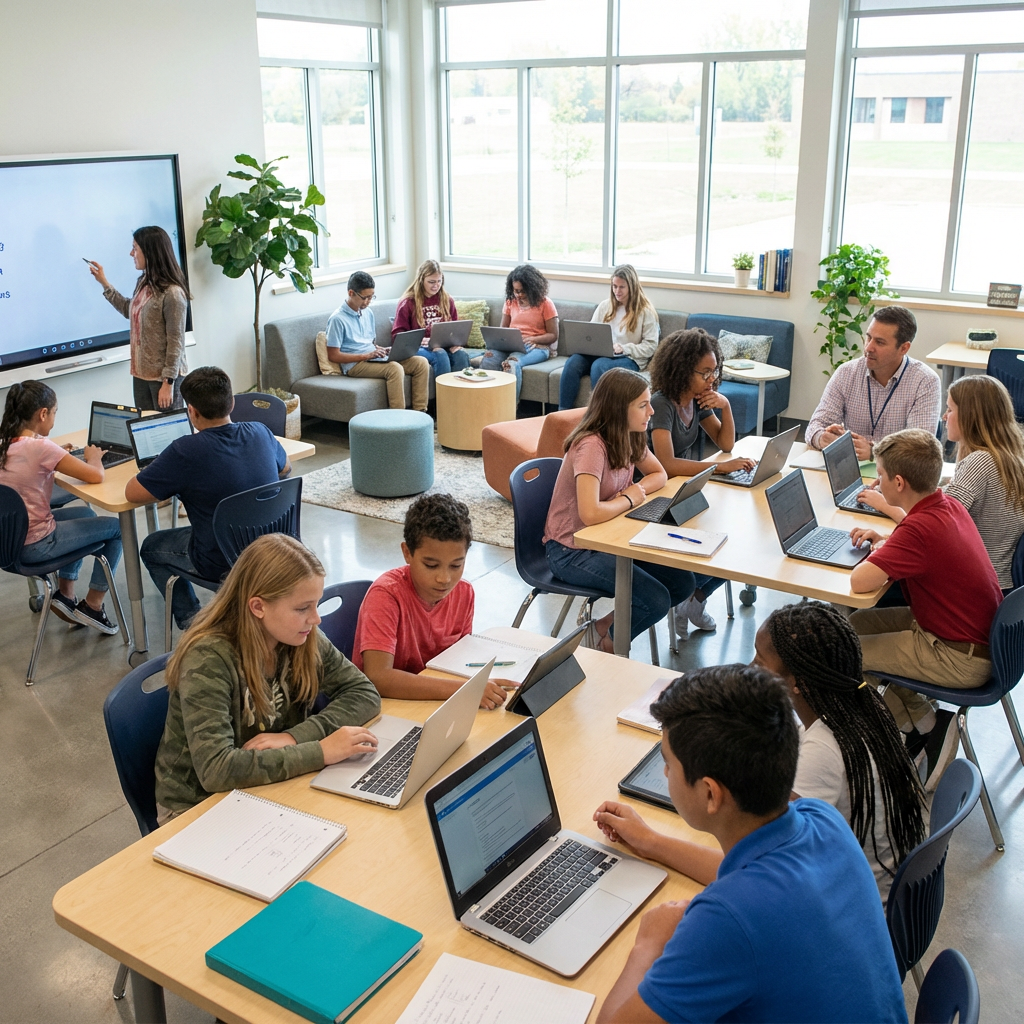
Designing a blended 7th grade Language Arts course throughout this class helped me better understand how technology can support instruction when it is intentionally aligned with learning objectives and assessment strategies. At the beginning of the course, I approached technology integration by focusing primarily on selecting digital tools to capture students’ interest. As the modules progressed, however, I began to recognize that the most effective technology integration occurs when instructional design, assessment, and digital tools work together to support meaningful learning. Developing different components of the course, such as the learning centers, flipped lesson, and digital storytelling assessment, helped me think more carefully about how technology can support deeper engagement and learning outcomes. Educational research also emphasizes that technology integration is most effective when it supports student-centered learning environments rather than simply adding digital tools to existing instruction (Hoffman & Vorhies, 2017).
One of the main challenges I experienced during this course involved learning how to use new educational technology tools. In the earlier modules, particularly when exploring different educational technologies, I had to experiment with platforms and tools that I had not used before. While I regularly use technology in my classroom, integrating unfamiliar tools required additional time to understand their features and how they could support instructional goals. Research on technology integration suggests that educators often need time to develop confidence with new digital tools before they can fully incorporate them into instruction (Sharp & Whaley, 2018). Although this learning process was initially challenging, it ultimately helped me expand my understanding of how different technologies can support collaboration, communication, and student-centered learning.
Another challenge involved creating instructional videos for the flipped lesson. Recording and designing YouTube-style instructional videos were not something I had done prior to this course. Developing the video required careful planning, scripting, and recording in order to ensure that instructions were clear and engaging for students. This experience helped me better understand the level of preparation required for effective flipped instruction. At the same time, it demonstrated how video-based instruction can provide students with opportunities to review content at their own pace, thereby improving comprehension and allowing more class time to focus on discussion and application.
A major area of growth during this course involved thinking about assessment in more creative ways. The digital storytelling assignment illustrated how technology can support performance-based assessment rather than relying only on traditional tests or worksheets. Instead of simply identifying informative text structures, students would research a topic, write a script, and present their learning through multimedia. Digital storytelling encourages students to actively construct meaning rather than passively receive information, which aligns with student-centered learning approaches (Robin, 2016). Designing this type of assessment required careful planning to ensure that expectations, instructions, and evaluation criteria were clearly aligned with the learning objectives.
If I were to redesign this course in the future, I would likely incorporate more opportunities for student collaboration through digital platforms. While several lessons included collaborative elements, there is potential to expand peer feedback and shared knowledge construction through collaborative tools such as shared documents, discussion boards, or interactive platforms. Collaborative digital environments can help learners build ideas together and engage in deeper discussions about content (Sharp & Whaley, 2018). Providing additional opportunities for structured peer feedback could strengthen both engagement and understanding.
Finally, if this course were developed for a different audience, such as professional educators participating in professional development, the structure would likely change in several ways. Instead of focusing primarily on student learning outcomes, the course could emphasize instructional decision-making and lesson design strategies. Educators could analyze lesson examples, discuss technology-integration strategies, and collaboratively adapt activities for their classrooms. This approach would allow teachers to reflect on how technology-supported instruction can be implemented effectively in their own teaching contexts
References
Hoffman, J. L., & Vorhies, C. (2017). Leadership 2.0: The impact of technology on leadership development.
Robin, B. R. (2016). The power of digital storytelling to support teaching and learning. Digital Education Review, 30, 17–29.
Sharp, L. A., & Whaley, B. (2018). Wikis as online collaborative learning experiences: A different kind of brainstorming. Adult Learning, 29(3), 83–91.
 Blended Learning ePortfolio
Leave a comment